ake control of your energy – don’t rely on outage schedules. A home Battery Energy Storage System (BESS) stores solar energy during the day and supplies it at night. During power outages, you can keep essential devices like Wi-Fi, laptops, the refrigerator, and the boiler running, providing up to 24 hours of backup power without any noise or fumes.
Page Contents
What is a BESS?
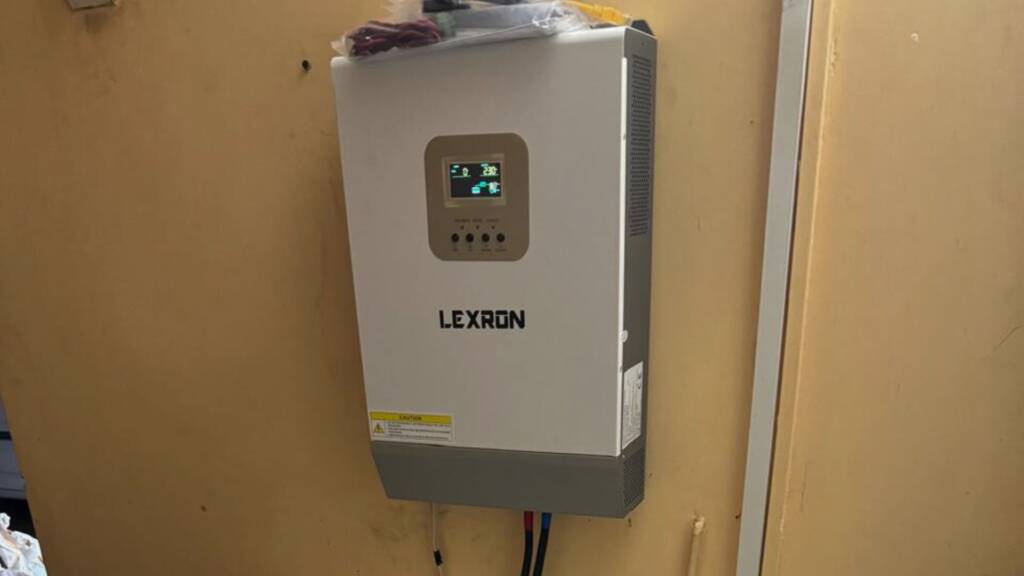
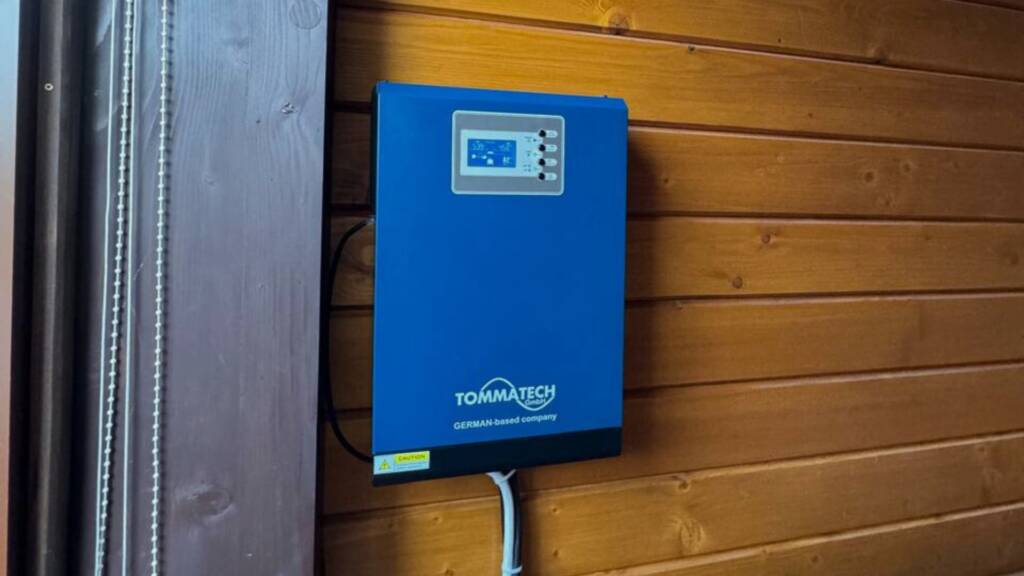
A BESS, or Battery Energy Storage System, is designed to work in conjunction with solar panels. During the day, solar panels charge the battery, and at night, the battery provides energy to your home. This means that essential devices like your Wi-Fi, refrigerator, and boiler can continue functioning even during power outages.
In essence, a BESS serves as an “energy reserve” that:
- Provides backup power for up to 24 hours
- Helps you save money when paired with a night tariff
- Protects appliances from voltage fluctuations
- Operates silently and reliably, without the need for a generator
How BESS Works and What It Is Used For
- Charging Phase: BESS (Battery Energy Storage System) charges using electricity from various sources, such as solar panels, the grid during off-peak hours, or other energy sources.
- Storage Phase: The electricity is stored in battery modules as direct current (DC).
- Discharge Phase: When energy is needed, an inverter converts the DC into alternating current (AC), providing standard 220V power to the home.
- Automatic Switching: In the event of a power outage, the system automatically switches to BESS power without requiring any user intervention.
Who is BESS Suitable For
Owners of Solar Panels:
If you already have a solar power system without a battery, BESS can store surplus energy, allowing you to use power at night or during outages.
People Experiencing Frequent Power Cuts:
For those living in apartments or houses with unstable electricity, BESS provides a silent backup solution without the need for a generator or fuel fumes.
Businesses Where Downtime Results in Losses:
Cafés, salons, pharmacies, and offices can benefit from BESS by keeping essential equipment like refrigerators, POS systems, and Wi-Fi operational, ensuring the business stays running.
Generator Users Seeking Quiet:
If you are tired of the noise, smell, and constant refueling associated with traditional generators, BESS offers a quiet, environmentally friendly, and automatic alternative.
Anyone Seeking Full Autonomy:
If you desire complete independence from the grid, combining solar panels with BESS transforms your home into a personal mini power plant.
Key Functions of a Battery for Solar Panels
Energy Storage
The battery stores excess electricity generated by solar panels during the day, making it available for use at night or during power outages.
Backup Power
It provides electricity when the grid is down, allowing household appliances to operate without interruption for up to 24 hours.
Appliance Protection
It stabilizes voltage, reduces the risk of power fluctuations, and helps extend the lifespan of household appliances
Advantages of Battery Energy Storage Systems (BESS)
- Ensures essential operations continue during power outages.
- Provides up to 24 hours of autonomy without noise or fuel consumption.
- Can reduce electricity bills by up to 60% by taking advantage of night tariffs.
- Operates silently and is environmentally friendly.
- Stabilizes voltage to protect appliances from surges and overloads.
- Features automatic switching between power sources without requiring user intervention.
Types of Battery Energy Storage Systems (BESS) and How to Choose the Right Capacity
| Type | Key Features | Suitable For |
|---|---|---|
| LiFePO₄ (LFP) | The safest lithium type. Up to 10,000 cycles, tolerates full/deep discharge, operates in temperatures from -10 to +50 °C. | For homes, apartments, businesses — the optimal choice. |
| Lithium-ion (Li-ion) | High energy density, lightweight and compact. Fewer cycles (up to 4,000). | For apartments or small offices where weight/size is important. |
| Nickel-Manganese-Cobalt (NMC) | High energy density and stable operation, but requires cooling. | For commercial and industrial systems. |
| Lead-acid (AGM, GEL) | Cheaper, time-tested, but heavy and has limited lifespan (up to 1,500 cycles). | For budget or temporary solutions. |
| Flow battery | Stores energy in electrolyte, long service life (up to 20 years), suitable for large capacities. | For industrial facilities and power plants 50 kW and above. |
| NaS (Sodium-sulfur) | High energy density, withstands extreme temperatures, operates at high voltage. | For large-scale systems or energy enterprises. |
How to Choose the Right Capacity
Quick Rule: 1 kWh = 1,000 Wh.
To calculate capacity (in kWh):
Capacity (kWh) = (Total load in watts × Backup hours) ÷ 1,000 × 1.2
The factor of 1.2 accounts for system losses and the depth of discharge (DoD) in LiFePO₄ batteries.
Keep in mind that these values are averaged; always use the rated power (as specified on the device’s label) of your appliances for precise calculations.
Typical use cases
| Scenario | Appliances / Examples | Total Power, W | Backup Time, hours | Recommended BESS Capacity, kWh |
|---|---|---|---|---|
| Apartment / Office | Wi-Fi, laptop, 2 lights, refrigerator | 250 W | 10 | ≈ 3 kWh |
| House up to 150 m² | Basic load + boiler, TV, router | 400 W | 12 | ≈ 6 kWh |
| House with heating / air conditioning | Previous setup + air conditioner / pump | 600–800 W | 12 | ≈ 9–12 kWh |
| Full autonomy (part of the house) | Lighting, Wi-Fi, refrigerator, boiler, PC | 700 W | 15 | ≈ 13 kWh |
| Full autonomy (entire house) | Lighting in all rooms, Wi-Fi/ONT, 2–3 refrigerators, boiler/pumps, kitchen appliances, washing machine, Smart TV, power outlets | 1200–1500 W | 12–15 | ≈ 20–25 kWh |
How We Work
- Initial consultation and energy usage review
- On-site inspection and system assessment
- Technical design and cost modelling
- Installation scheduled around academic calendars
- Monitoring, maintenance, and support
Why Choose Rubiсon
- 50+ energy projects delivered
- Proven experience with 10-500 kW+ systems
- Engineering-first approach (load profile + electrical reality, not “generic kits”)
- Financing strategy support
- Technical audit and tailored system architecture
- Quote in 24 hours, quick installation
- Turnkey EPC: design → installation → support
- Transparent pricing: fixed budget, no hidden costs
FAQ
A BESS provides backup power for up to 24 hours, reduces reliance on the electrical grid, and protects appliances from voltage fluctuations.
Yes, BESS systems are modular. You can increase capacity by adding one or more battery modules without needing to change the inverter.
For high energy demands, we recommend Lithium Iron Phosphate (LiFePO₄) batteries with capacities of 10-15 kWh. These batteries deliver stable power, making them suitable for boilers and air conditioners.
Yes, if your inverter is hybrid or supports external storage, BESS can be integrated into your existing setup without the need to replace any equipment.
Yes, a BESS can reduce electricity bills by up to 40% through night tariffs and self-generation. It also ensures power availability during outages, providing both energy savings and peace of mind.
To extend battery life, avoid deep discharging, operate the system within the temperature range of -10 °C to +50 °C, and keep the Battery Management System (BMS) firmware up to date. Our engineers also conduct annual system audits.
Typically, the warranty lasts for 10 years or covers 6,000 to 10,000 cycles. We offer both warranty and post-warranty service, which includes BMS checks and communication reworks.